
What Is Ascorbic Acid?
Another name for ascorbic acid, or vitamin C or VC, is a water-soluble vitamin. It has strong reducing qualities, is odorless, sour, and looks as a white crystalline powder that dissolves readily in water. It can be utilized in the food sector as a nutritional supplement and antioxidant.
There are three main preparation processes for ascorbic acid in China:
1. Convert starch (usually corn starch) into D-sorbitol through microbial fermentation, and then further convert it into 2-keto-L-gulonic acid, and finally into ascorbic acid. This process is relatively mature, efficient, and relatively low in cost. The ascorbic acid that can be produced is of high purity and is suitable for large-scale industrial production.
2. Convert D-glucose into 2,5-diketo-D-gluconic acid through microbial fermentation, and then convert it into ascorbic acid through complex reactions. The process steps are relatively complex and the cost is relatively high.
3. Use genetically engineered microorganisms to directly ferment glucose to produce ascorbic acid. However, this process has extremely high production efficiency and environmental advantages, but it has high technical requirements and is still in the development and optimization stage.
Natural Dietary Sources
Synthetic ascorbic acid, chemically identical to natural sources, is widely used in dietary supplements and food fortification.
What’s Form?
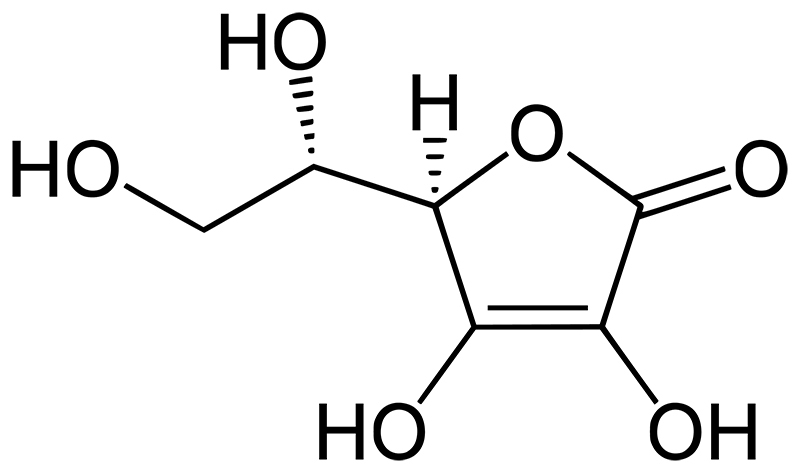
This is the mirror image of L-ascorbic acid and is not biologically active in humans. It is rarely found in nature and does not contribute to Vitamin C’s nutritional or therapeutic effects.
What are The Different Types of Derivatives?
 |
What’s Function?
Ascorbic acid (Vitamin C) plays a vital role in maintaining overall health and well-being, with its antioxidant, collagen synthesis, immune-enhancing, iron absorption, neurotransmitter synthesis, and antiviral properties contributing to its numerous physiological functions. It serves several functions in the body:
 |
Related Parameters:
| Items | Specification |
| Melting Point | About 190°C |
| Specific Rotation | +20.5°~+21.5° |
| Acidity(pH) | 2.1~2.6(5% aqueous solution) |
| 2.4~2.8(2% aqueous solution) | |
| Assay | 99.0%~100.5% |
| Loss on Drying | ≤0.40% |
| Oxalic Acid | ≤0.3% |
| Related Substance | Impurity C:≤0.15% |
| Impurity D:≤0.15% | |
| Unspecified Impurities:≤0.10% | |
| Total Impurities other than C、D:≤0.2% | |
| Heavy Metals | ≤10ppm |
| Arsenic | ≤3ppm |
| Lead | ≤2ppm |
| Mercury | ≤1ppm |
| Copper | ≤5ppm |
| Iron | ≤2ppm |
| Sulphated Ash | ≤0.1% |
| Clarity of Solution | Clear |
| Color of Solution | ≤BY |
| Residual Solvents | Methanol≤0.3% |
Recommended Dosage:
| Food name | Maximum usage(g/kg) |
| Fruit juice drinks | 0.2-0.5 g/kg |
| Carbonated drinks | 0.2-0.5 g/kg |
| Jam | 0.3-0.8 g/kg |
| Jelly | 0.5-1.0 g/kg |
| Canned fruit | 0.2-0.5 g/kg |
| Pickled food | 0.5-1.0 g/kg |
| Meat products | 0.2-0.5 g/kg |
| Sausages | 0.3-0.8 g/kg |
| Ham | 0.2-0.5 g/kg |
| Dairy products | 0.1-0.3 g/kg |
| Yogurt | 0.1-0.3 g/kg |
| Bread | 0.1-0.5 g/kg |
| Candy | 0.5-1.0 g/kg |
| Salad dressing | 0.2-0.5 g/kg |
Ascorbic Acid Has A Wide Range Of Uses
1. Antioxidant: As a powerful antioxidant, ascorbic acid can neutralize free radicals and prevent oxidative damage to cells and tissues. This characteristic is frequently utilized in food and cosmetics, assisting in product shelf life extension and active component protection.
2. Nutritional enhancer: As the main form of vitamin C, ascorbic acid is an essential water-soluble vitamin that participates in a variety of physiological metabolic processes, promotes collagen synthesis, enhances immunity, and helps iron absorption. This makes it an important nutritional enhancer in food and beverages, improving the nutritional value of products.
3. Color protector: Ascorbic acid can inhibit enzymatic and non-enzymatic browning reactions in food and maintain the natural color of food. Used in fruit and vegetable processing, jams, jellies and canned foods, it can prevent color darkening and maintain the fresh appearance of the product.
4. Preservative: Ascorbic acid plays a preservative role by inhibiting the growth and reproduction of microorganisms and delaying the spoilage of food. This is especially important in products such as meat products, canned foods and beverages, effectively extending the shelf life of food.
5. Fermentation promoter: In the production process of some fermented foods, ascorbic acid can be used as a fermentation promoter to improve fermentation efficiency. This is widely used in fermented foods such as wine, soy sauce and vinegar, which can improve the fermentation effect and improve the quality of the product.
6. Acidity regulator: Ascorbic acid is acidic and can adjust the pH value of food, thereby improving the taste and stability of food. It is used in foods such as beverages, candies and jellies to adjust the acidity, increase the flavor of the product, and make it more popular with consumers.
User Asked Question:
Q: What are the health benefits of ascorbic acid?
A: The primary form of vitamin C is ascorbic acid, which has potent antioxidant properties. It helps neutralize free radicals and prevent cell damage. It is also involved in the synthesis of collagen, promotes wound healing, strengthens the immune system, improves the body’s resistance to infection, and helps absorb iron and prevent anemia.
Q: What are the advantages of ascorbic acid compared to vitamin E?
A: Compared with vitamin E, ascorbic acid (vitamin C) has the advantages of versatility, water solubility, cost-effectiveness and high safety. Ascorbic acid can not only act as a powerful antioxidant to prevent food oxidation, but also provide vitamin C as a nutritional enhancer and participate in a variety of physiological metabolic processes.
Its water solubility makes it easy to use in water-based foods such as juice. For example, in orange juice, ascorbic acid can maintain fresh taste and color, extend shelf life, and improve nutritional value. These advantages make it more widely and conveniently used in the food industry.