
Non-Dairy Creamer (NDC) has long moved beyond its original role as a simple milk substitute. In today’s food and beverage industry, it functions as a multi-component formulation system designed to deliver consistency, stability, and sensory performance across a wide range of applications.
From beverages and frozen desserts to bakery and confectionery products, NDC ensures consistent texture, smooth mouthfeel, and stable shelf life. Understanding what Non-Dairy Creamer is—and how different formulations perform in different systems—is essential for making informed formulation decisions.
This guide provides a structured overview of NDC: its definition, composition, application-driven solutions, functional benefits, and key considerations.
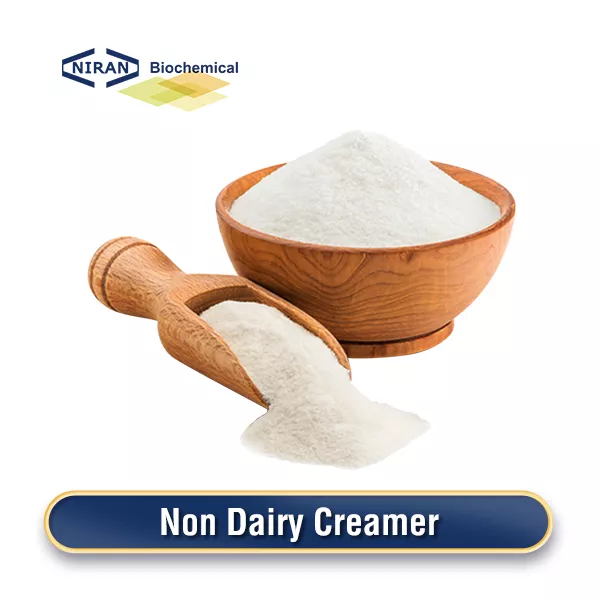
What Is Non-Dairy Creamer?
Non-Dairy Creamer (NDC) is a composite, value-added food ingredient formulated to replicate or enhance the functional properties of dairy ingredients without relying on fresh milk or cream.
Unlike traditional dairy creamers, NDC blends plant-based fats with functional carriers to perform consistently under industrial conditions. It comes in powder or liquid form, which simplifies storage, transport, and dosing.
Typical Composition of Non-Dairy Creamer
While formulations vary by application, a standard NDC system often includes:
- Corn Syrup Solids – Provide bulk, mild sweetness, and contribute to solubility and mouthfeel.
- Vegetable Oils – Commonly hydrogenated coconut oil or palm kernel oil, supplying creaminess, fat structure, and lubrication.
- Sodium Caseinate – A functional protein used for emulsification, whitening, and stability.
- Other Functional Ingredients – Including emulsifiers, stabilizers, anti-caking agents, colors, and flavors.
Production transforms these components into a homogeneous solution and then into a stable powder or liquid using controlled techniques.
How Is Non-Dairy Creamer Manufactured?
Non-Dairy Creamer (NDC) is produced through a controlled process that transforms liquid plant-based ingredients into a stable, easy-to-use powder.
The core objective is to create a uniform fat–water system first, then gently remove moisture while preserving solubility, mouthfeel, and stability.
Ingredient Preparation and Mixing
Production begins with precise dosing of glucose or corn syrup solids, vegetable oils, functional proteins, and minor ingredients such as emulsifiers and stabilizers. These components are blended under high shear to form a stable oil-in-water emulsion.
This emulsification step is critical, as it directly influences whitening performance, texture, and dispersion in finished applications.
Heat Treatment and Spray Drying
The production process heats the emulsion to ensure safety and stability, then spray-dries it. Spray drying atomizes and dries the liquid within seconds, creating free-flowing powder particles that encapsulate the fat.
Careful control of drying conditions determines powder solubility, flowability, and reconstitution behavior.
Final Blending
When required, heat-sensitive components such as vitamins or minerals are added after drying. The final product is a consistent Non-Dairy Creamer designed for reliable performance across specific applications.
Why Non-Dairy Creamer Is Used Across Applications
The adoption of Non-Dairy Creamer is driven by formulation and processing requirements rather than simple ingredient substitution.
As product systems scale and diversify, formulators often seek ingredients that offer consistent performance, stability under challenging conditions, and flexibility across multiple product categories.
For this reason, NDC is not a one-size-fits-all ingredient. Formulators develop different solutions to achieve targeted benefits, including better mouthfeel, heat and acid stability, and reliable processing performance.
Application-Based Non-Dairy Creamer Solutions
A. Beverage Applications
Beverages demand fast solubility, visual appeal, and stability under varying pH and temperature conditions.
Coffee Creamer Solutions
Coffee systems present a naturally acidic environment, which can destabilize poorly designed formulations.
Application-specific Non-Dairy Creamer solutions provide strong acid stability, consistent whitening performance, smoother mouthfeel, and reliable solubility in instant and vending formats.
Milk Tea and Specialty Tea Creamers
Tea-based beverages require a balance between body enhancement and flavor transparency.
Specialized formulations enhance color opacity and surface gloss while maintaining tea aroma clarity and stability in both hot and cold preparations.
Cold Water Soluble Creamers
Powder dispersibility is often a challenge in cold beverage formulations.
Cold water soluble Non-Dairy Creamers dissolve quickly at low temperatures, minimizing clumping and oil separation.
B. Frozen Dessert Applications
In frozen systems, Non-Dairy Creamer functions as a structural component rather than a simple flavor enhancer.
Ice Cream and Soft-Serve Creamers
These formulations improve overrun control, enhance whippability, reduce ice crystal growth, and contribute to better melt resistance and creaminess.
Premix and DIY Ice Cream Solutions
Integrated premix systems reduce formulation complexity while delivering consistent results with minimal equipment requirements.
C. Bakery and Confectionery Applications
Bakery Creamers
In baked goods, Non-Dairy Creamer improves dough handling, enhances moisture retention, slows starch retrogradation, and helps maintain softness throughout shelf life.
Confectionery and Milk-Based Candy Applications
These systems provide high thermal stability, controlled fat release, and balanced texture in finished confectionery products.
D. Functional Fats and Dairy Replacement Systems
Whipping Cream Powder (Non-Dairy)
This solution offers high overrun potential, excellent foam stability, and strong resistance to acidic environments.
Fat-Filled Milk Powder
By replacing milk fat with vegetable fat while retaining milk proteins, this system delivers functional performance with improved cost stability.
Cheese and Yogurt Powders
These powders provide shelf-stable fermented dairy flavors that integrate easily into dry mixes, sauces, and fillings.
Key Considerations When Using Non-Dairy Creamer
The performance of Non-Dairy Creamer depends on selecting formulations that are aligned with specific processing conditions and application requirements.
- Protein system selection and labeling considerations, as different protein sources affect emulsification behavior and regulatory declarations.
- Fat composition and melting behavior, which influence mouthfeel, whitening performance, and stability during heating or cooling.
- Compatibility with heat, acidity, or freezing conditions, particularly in applications such as coffee, frozen desserts, and baked goods.
- Regulatory alignment across different markets, including ingredient definitions and permissible fat systems.
- Proper storage and handling practices to maintain powder flowability and functional performance.
In addition, some consumers associate Non-Dairy Creamer with concerns related to fat quality or ingredient processing.Careful formulation design addresses these perceptions by applying optimized fat systems, controlled processing methods, and transparent labeling that meets local market expectations.
Conclusion
The true value of Non-Dairy Creamer lies in the interaction between fat systems, carbohydrate carriers, proteins, and functional ingredients within a specific application.
Across beverages, frozen desserts, bakery, confectionery, and dairy-alternative systems, well-designed Non-Dairy Creamer solutions support consistent texture, stable processing performance, and reliable sensory quality.
When selected and applied correctly, Non-Dairy Creamer enables product consistency, formulation flexibility, and scalable production, making it a versatile and essential component in modern food and beverage development.