
Sodium Acid Pyrophosphate, commonly abbreviated as SAPP and also known by its food additive code E450(i), is an important inorganic compound widely used across the food industry and other sectors. Its multifunctional properties—as a leavening acid, pH regulator, chelating agent, and stabilizer—make it a versatile ingredient in food processing, industrial applications, and manufacturing.
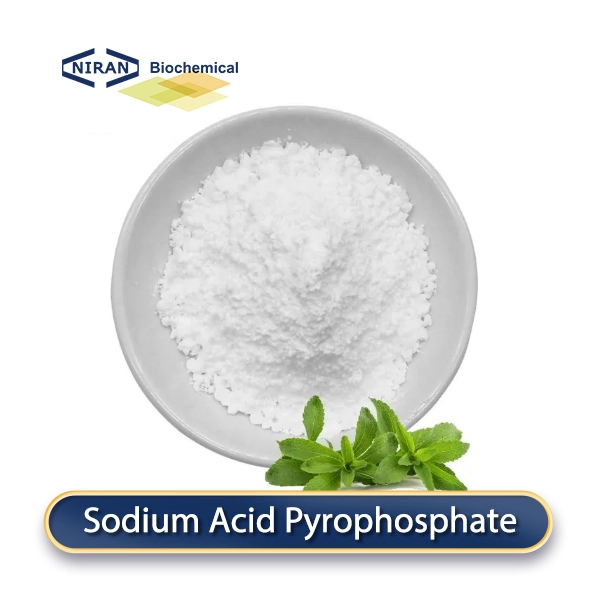
What is Sodium Acid Pyrophosphate (SAPP)?
Sodium Acid Pyrophosphate (Na₂H₂P₂O₇) is highly water-soluble and is classified as an inorganic phosphate salt.
In chemical terms, it consists of two sodium ions and a pyrophosphate anion derived from the dehydration of phosphoric acid derivatives. Its structure enables participation in various beneficial reactions for industries.
Unlike naturally occurring food components, Sodium Acid Pyrophosphate is synthetic—produced via controlled chemical processing to ensure purity and performance.
Key Physical and Chemical Properties
Here are some essential properties of Sodium Acid Pyrophosphate:
| Property | Value / Description |
| Chemical Formula | Na₂H₂P₂O₇ |
| Molecular Weight | ~221.94 g/mol |
| Appearance | White crystalline powder or granules |
| Solubility | Soluble in water |
| pH | Acidic in aqueous solution |
| Odor | Odorless |
| Decomposition Temperature | ~220°C (decomposes) |
| Density | ~1.86 g/cm³ |
| Taste | Slight acidic/tart taste |
These physical and chemical attributes make SAPP suitable for controlled reactions in food formulation—especially those requiring gradual gas release or precise acidity adjustment.
How is Sodium Acid Pyrophosphate Produced?
Commercial SAPP production involves the partial neutralization of phosphoric acid (often food grade) with sodium salts such as sodium carbonate or sodium hydroxide to form monosodium phosphate.
Because the manufacturing process is controlled, SAPP can be produced in consistent grades for different uses, including food grade (meeting FDA, EFSA and other regulatory standards) and industrial grades with broader tolerances.
Main Uses and Applications
Sodium Acid Pyrophosphate is an extremely versatile ingredient with applications spanning multiple industries. The most common ones include:
Food Industry
As a food additive, SAPP is used for:
- Leavening agent: This slow, controlled release makes it suitable for cakes, quick breads, pancakes, and other baked goods.
- Acidity regulator: Helps adjust the pH value in foods, enhancing flavor, texture, and stability.
- Chelating agent: Binds metal ions in food products to prevent discoloration, off-flavors, or unwanted texture changes, especially in processed potato products.
- Emulsifier/stabilizer: Assists in cheese making, creamy sauces, and other emulsified foods by improving texture and preventing separation.
- Dough conditioner: Improves elasticity and gas retention in dough, resulting in consistent texture and improved shelf life.
- Moisture retention: Used in processed meats to improve water-holding capacity and juiciness.
Snack & Ready-to-Eat Foods
In products like potato chips, crackers, frozen snack foods, and breakfast cereals, SAPP helps:
- Maintain texture and crispiness.
- Prevent clumping in powders.
Stabilize colors and preserve quality over extended storage.
Other Industrial Uses
Although SAPP’s primary use is in food, it also fulfills roles in:
- Water treatment: As a buffering agent and chelating compound in systems requiring controlled pH and metal ion management.
- Cleaning products: In detergents and cleaners, SAPP can chelate hard water ions, improving performance.
- Manufacturing processes: Some metal treatment and corrosion control applications utilize SAPP’s chelating properties for improved processing.
Regulatory Status and Safety
General Safety
Sodium Acid Pyrophosphate is considered safe (GRAS) by global regulatory agencies like the FDA, EFSA, and JECFA, and is approved for use in various food products.
Consumption & Health Considerations
SAPP contributes phosphate ions to the diet, which are essential minerals. However, concerns surrounding phosphate additives generally arise only with excessive consumption over long periods. High overall phosphate intake may influence calcium balance, bone metabolism, and kidney function—particularly in individuals with renal disorders or impaired mineral regulation.
For the general population consuming a varied diet, SAPP used at regulated levels presents minimal risk. Most phosphate in the diet comes from natural foods such as dairy, meat, and legumes, and additive sources contribute small relative amounts.
Handling, Storage & Quality Control
Storage
Because contact with moisture can begin hydrolysis (transforming SAPP into other phosphate forms), proper packaging—such as sealed drums or bags—is essential.
Handling Safety
Though considered safe for food use, the fine powder can irritate skin and eyes upon direct contact and may cause irritation if inhaled. Appropriate precautions—such as:
- Adequate dust-control measures
- Ventilated processing areas
Quality Specifications
Food-grade SAPP must comply with specific purity criteria (e.g., limits on heavy metals, moisture content, and impurities) as stipulated by food additive standards such as FCC, EC 1333/2008, and others, depending on regional regulations.
Advantages and Limitations
Advantages
- Versatility: Functions as a leavening agent, stabilizer, chelating agent, acidity regulator, and more.
- Process compatibility: Withstands high-temperature processes and freezing without losing functionality.
- Improved product quality: Enhances texture, color, stability, and overall product consistency.
- Regulatory acceptance: Globally approved as a safe food additive within regulated limits.
Limitations
Taste considerations: At high concentrations, phosphate residues can impart a slight bitter taste, so formulations must be optimized.
Health concerns at excessive intake: While generally safe, overconsumption of phosphate additives should be monitored, particularly among vulnerable populations.
Sodium Acid Pyrophosphate (SAPP) is a versatile, effective compound widely used in food and industrial manufacturing. Its controlled reactivity, ability to adjust pH, stabilize products, and release gas make it invaluable in baking and processed foods, while its compatibility with industrial formulations expands its applications beyond the kitchen.
Although consumer concerns about additives are understandable, decades of regulatory review and scientific study support the safety of SAPP when used within approved limits. As with all food additives, awareness of intake, formulations tailored to specific applications, and compliance with food safety standards ensure both efficacy and safety.