
Isolated Soy Protein Injection (sometimes called Injectable Soy Protein Isolate) is a specialized form of soy protein designed for direct incorporation into large cuts of meat and other processed foods to improve texture, increase yield, and enhance nutritional value. Unlike conventional soy protein isolates used in powders and food formulations, the injection type is formulated to dissolve easily in brines and penetrate muscle tissue effectively, making it especially valuable in the meat processing industry.
What Is Isolated Soy Protein Injection?
Isolated Soy Protein Injection is a high-purity soy protein product — typically containing ≥90% protein — manufactured to be soluble in aqueous solutions and suitable for injection into foods, especially meat products.
Through processing steps that remove fats and carbohydrates, what remains is a protein-rich ingredient valued for its emulsifying, water-binding, and texturizing properties. The injection version of this isolate is specifically engineered for low viscosity in liquids, allowing it to be easily mixed into brines and pumped into whole muscle meats using commercial injection equipment.
In meat formulation, this product functions both as a functional ingredient (for texture and moisture retention) and as a nutritional enhancer (boosting protein content).
Key Properties of Isolated Soy Protein Injection
| Characteristic | Typical Feature |
| Protein Content | ≥ 90% (dry basis) |
| Physical Form | Powder designed for brine dispersion |
| Dissolution | Rapid and complete in water |
| Viscosity | Low (enabling easy injection) |
| Functionality | Water binding, texture improvement, emulsification |
| Safety Profile | Food-grade, compliant for meat processing |
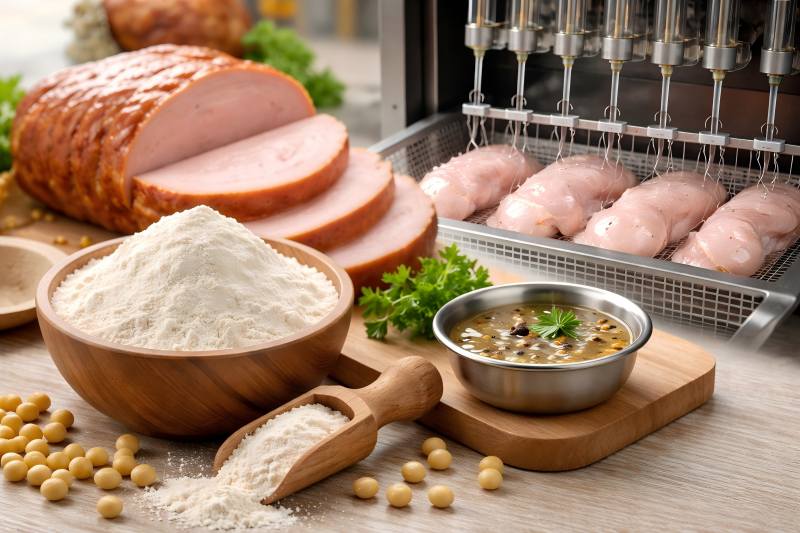
Isolated soy protein injection dissolves quickly in brine or aqueous solutions, forming a low viscosity mixture that can be injected into meat via automated pumps. Once inside the muscle, it interacts with meat proteins to enhance water retention and significantly improve texture and yield.
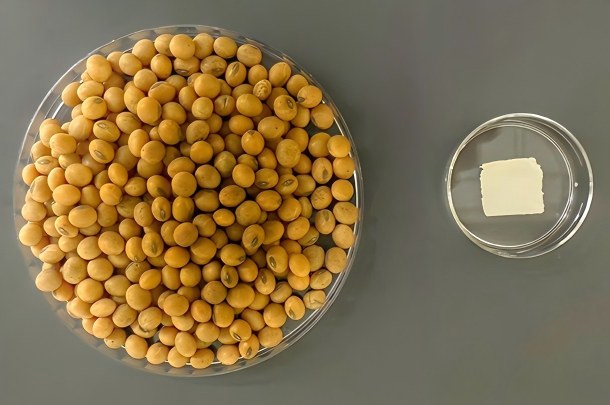
How Is Isolated Soy Protein Injection Produced?
Isolated soy protein — whether for direct food applications or injection use — is produced by removing non-protein components from defatted soy flour. Commercial processes may involve:
- Protein Extraction: Soy flour is mixed with water and a pH modifier to solubilize protein.
- Separation: Insoluble carbohydrates and lipids are removed through centrifugation or filtration.
- Precipitation: The protein is precipitated out at its isoelectric point and separated.
- Purification: Further washing steps eliminate residual non-protein impurities.
- Drying: The protein slurry is dried to produce a high-protein powder.
For the injection type, the processing and drying steps are optimized to yield a powder that reconstitutes rapidly and remains stable in brine solutions without forming clumps or gels — a key consideration for injection performance.
Applications of Isolated Soy Protein Injection
Meat Processing
The most widespread application is in high-value meats such as:
- Ham and cured meats
- Bacon and roast products
- Poultry and deli meats
- Barbecue and smoked products
By injecting protein-rich brines into these products, processors can:
- Increase water retention, leading to juicier and more tender meat.
- Improve texture uniformity throughout the product.
- Enhance yield, reducing weight loss during cooking and boosting profitability.
Typical usage rates in meat brines range from 2–5% of the total formulation, depending on the product type and desired outcome. The injected soy protein helps the cured meat bind and hold more water, which not only improves eating quality but can also increase finished product weight by up to 20% in some cases.
Benefits of Using Isolated Soy Protein Injection
Enhanced Water Retention and Yield
When meat is injected with soy protein-enriched brine, the protein interacts with muscle fibers and improves the meat’s capacity to hold water during cooking. This mitigates shrinkage and keeps products juicier and heavier, yielding cost savings.
Improved Texture and Mouthfeel
Injected soy protein helps fill structural gaps within the meat, leading to a more tender and unified texture, avoiding mushiness and improving mouthfeel in the finished product.
Cost Efficiency
By increasing the water content and overall yield, food processors can improve margins without compromising on quality — a significant advantage in competitive markets.
Higher Protein Content
The addition of high-quality soy protein increases the total protein content of the finished product, allowing formulations to meet nutritional labeling targets more easily.
Choosing the Right Soy Protein Injection Product
When selecting an isolated soy protein injection ingredient for your operation, consider:
- Protein purity and standardization (e.g., ≥90% protein).
- Solubility and ease of dissolution in brines.
- Viscosity characteristics, ensuring compatibility with injection line equipment.
- Regulatory compliance for food-grade ingredients.
High-quality products deliver consistent performance and reduce processing issues like nozzle clogging or uneven distribution.
Safety, Quality, and Regulatory Considerations
Isolated soy protein is widely used in the food industry and is generally recognized as safe (GRAS) when produced and handled according to regulatory requirements.
- Food Safety: The ingredient must be free of contaminants, pathogens, and mycotoxins.
- Allergen Labeling: Because soy is a common allergen, products containing soy protein require proper labeling as per local food regulations.
- Production Residues: Some studies note that trace residual solvents (like alcohol or hexane) might remain after soy processing, though these are typically at levels accepted in food production.
Meat processors must ensure that their soy protein injection products adhere to local food safety standards like the FDA in the U.S. or EFSA in Europe.
Comparison With Other Protein Enhancers
Isolated soy protein injection is one option among several for improving meat texture and yield:
| Ingredient | Key Feature | Typical Use |
| Soy Protein Isolate | High protein, strong water retention | Injection, brines, emulsions |
| Soy Protein Concentrate | Moderate protein with more fiber | Comminuted meats |
| Non-Injected Soy Powders | General formulation use | Bakery, beverages |
| Other Proteins (e.g., whey) | Higher cost, dairy origin | Specialty products |
Compared with other proteins, isolated soy protein is cost-effective and offers excellent functionality for brined meat products thanks to its high purity and solubility.
Common Misconceptions
Soy Isolates Are Only for Vegans
While soy isolate is popular in plant-based applications, the injection form is specifically formulated for meat processors and is used in cured meats and poultry.
Injected Protein Replaces Real Meat
Injection does not replace muscle tissue — rather it integrates with it to improve functional qualities such as water retention and texture.
Typical Usage Instructions (Example)
- Prepare Brine: Dissolve isolated soy protein in clean water at recommended percentage (e.g., 2–5%).
- Add Curing Ingredients: Salt, sugar, phosphates, and other flavoring or preservative agents as needed.
- Mix Thoroughly: Ensure complete dissolution and a uniform brine.
- Inject Into Meat: Use pump or injection system calibrated to product specifications.
- Rest/Process: Allow time for equilibration before cooking or further processing.
Follow manufacturer guidelines and adjust ratios for product type.
Conclusion
Isolated Soy Protein Injection is a critical ingredient in modern meat processing, offering measurable improvements in water retention, texture, product yield, and protein content. Its specialized formulation allows for easy dissociation in brines and reliable performance with commercial injection systems.
For meat processors seeking to enhance product quality while controlling cost, isolated soy protein injection remains a powerful, versatile, and scientifically validated solution — blending functionality, nutrition, and processing efficiency into a single ingredient.