
Isolated Soy Protein (ISP) emulsion has become a cornerstone ingredient in modern food science and related industries. It plays a critical dual role—serving as a source of high-quality plant protein while also acting as an effective emulsifier.
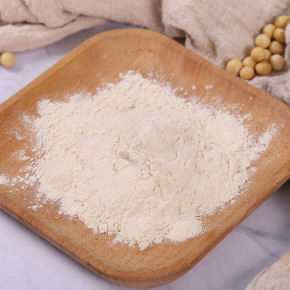
What is Isolated Soy Protein Emulsion?
An Isolated Soy Protein Emulsion refers to a mixture in which oil droplets are finely dispersed in a water phase, stabilized mainly by soy protein isolate (SPI)—a plant protein extracted from soybeans with a protein content of ≥90% on a dry basis.
Key Components:
- Soy Protein Isolate (SPI): Main emulsifying agent.
- Oil Phase: Typically soybean oil or other vegetable oils.
- Aqueous Phase: Water or water-based solution.
- Optional Additives: Stabilizers, flavor agents, thickeners depending on the application.
SPI acts as a natural emulsifier because of its amphiphilic nature—meaning it contains both hydrophilic and hydrophobic segments that allow it to adsorb at the oil-water interface and stabilize droplets against coalescence.
Physical & Chemical Properties
Below is a reference table summarizing the general properties and parameters associated with isolated soy protein emulsions under typical conditions.
Physical & Chemical Properties of SPI Emulsions
| Property | Typical Range / Behavior |
| Droplet Size (Oil Phase) | 100–800 nm (nanoemulsions) |
| Phase Type | O/W (oil in water) |
| Appearance | Cloudy / milky (depends on droplet size & concentration) |
| pH Stability Range | ~3.5–7.5 (varies with formulation) |
| Protein Content | ≥ 90% (SPI raw material) |
| Interfacial Activity | High due to amphiphilic nature |
| Thermal Stability | Moderate to high (improved with cross-linking or gels) |
| Note: Exact values depend on soybean oil concentration, protein level, pH, processing conditions. |
How Isolated Soy Protein Emulsions Are Made
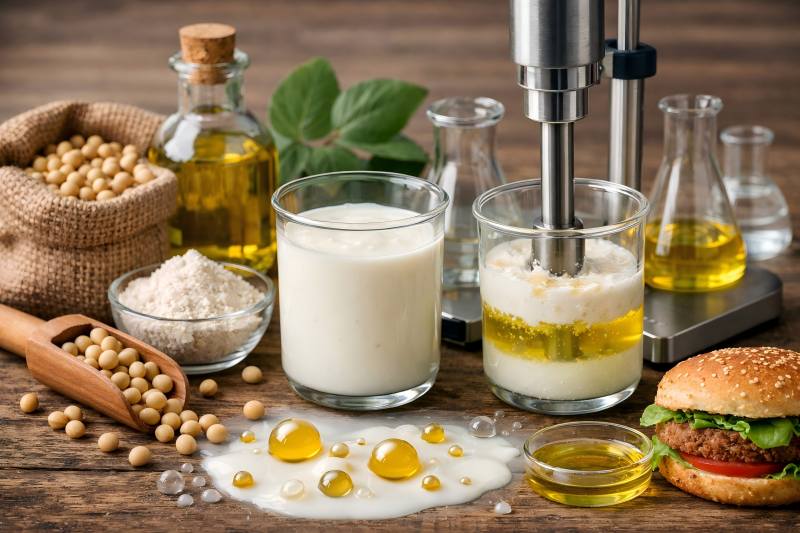
SPI emulsions are produced through controlled mixing and dispersion methods that ensure stable droplet formation and long-term stability.
Raw Material Selection
- Soybeans: Non-GMO sources are preferred for food applications.
- SPI Powder: Extracted from defatted soy flour through pH-based protein precipitation.
Emulsification Process
A typical manufacturing approach includes:
- Protein Hydration: Reconstituting SPI in water.
- Oil Addition: Vegetable oil (e.g., soybean oil) is slowly introduced.
- High-Shear Mixing: Homogenizers, ultrasonic processing, or high-pressure systems create fine droplets.
- Optional Gel Formation: Temperature, enzymes, or acids can be used to form emulsion gels.
Stabilization Techniques
- Adjusting pH to enhance protein unfolding and interfacial adsorption.
- Adding co-emulsifiers such as polysaccharides or lecithin in complex food systems.
- Utilizing ultrasonic or high-pressure homogenization to achieve nano- or micro-scale droplets.
Functional Properties and Mechanisms
Isolated soy protein emulsion possesses multiple functional properties that determine its performance in products.
Emulsifying Ability
SPI can reduce surface tension between oil and water phases, forming stable emulsions.
Mechanism:
- The hydrophobic segments of SPI anchor onto oil droplets, while hydrophilic segments interact with water.
- This builds a protective protein layer at the interface to resist droplet aggregation and coalescence.
Stability
Emulsion stability refers to resistance against:
- Creaming
- Coalescence
- Phase separation
Factors affecting stability include:
- Protein concentration
- Oil volume ratio
- pH and ionic strength
- Processing conditions
Gelation & Emulsion Gels
Under certain processing conditions (e.g., acidification, heat, or enzymes), SPI emulsions can transition into emulsion gels—three-dimensional protein networks entrapping oil droplets.
Applications:
- Emulsion gels are used for fat analogues, texture modification, and controlled release of nutrients.
Nutritional Benefits
SPI emulsions deliver high-quality plant protein with essential amino acids and offer applications in vegetarian or vegan products.
Applications Across Industries
SPI emulsions are widely used due to their versatility and natural origin.
Food Industry
This is the largest application sector for SPI emulsions.
| Application | Function |
| Beverages | Stability and mouthfeel (especially plant-based drinks) |
| Meat & Sausages | Fat binding, moisture retention, texture enhancement |
| Bakery Products | Dough conditioning, aeration, emulsification |
| Dairy Alternatives | Smooth texture in plant milks and yogurts |
| Nanoemulsified Functional Foods | Encapsulation of bioactives and flavors |
Nutraceuticals and Supplements
SPI emulsion systems can encapsulate vitamins, omega oils, or bioactive compounds for improved bioavailability.
Cosmetics & Personal Care
Soy protein’s emulsifying and foaming properties are valuable in creams, lotions, and hair care products.
Pharmaceuticals
Used as delivery vehicles for lipophilic drugs in controlled-release formulations.
Advantages of Isolated Soy Protein Emulsion
Natural and Plant-Based
SPI is gluten-free, dairy-free, and generally recognized as safe (GRAS) for food use.
Health & Nutrition
High protein with essential amino acids—ideal for plant-based diets.
Functional Flexibility
- Excellent emulsifying capability
- Works in heat-processed foods
- Improves texture and shelf stability
Environmental Sustainability
Compared to animal proteins, soy proteins generally have lower environmental impact in terms of land and water use.
Challenges and Limitations
Despite its benefits, SPI emulsions face certain technical or industry-specific limitations.
Sensitivity to pH and Salt
Protein structure and interfacial behavior are influenced by pH and ionic strength, which can reduce stability under extreme conditions.
Allergenicity
Soy protein is one of the common allergens. Products must be labeled accordingly, and processors must manage cross-contamination risks.
Flavor Profiles
SPI may impart beany or off-flavors, requiring masking agents in some food applications.
Interfacial Limitations
Natural SPI adsorption at the oil-water interface can be limited under high-oil load or complex formulations. Research is ongoing to enhance this through protein modification or co-emulsifiers.
Market Trends & Future Outlook
The demand for plant-based proteins continues to surge due to:
- Rising consumer interest in vegetarian and flexitarian diets.
- Growth in sustainable and functional foods.
- Expansion of high-protein beverages and snacks.
Future Research Directions:
- Enhancing stability through novel protein modifications.
- Developing tailored emulsion systems for targeted nutrient delivery.
- Combining SPI with polysaccharides or nano-carriers for advanced functionalities.
Comparison with Other Emulsifiers
SPI vs Other Common Emulsifiers
| Property | Isolated Soy Protein (SPI) | Lecithin | Whey Protein |
| Plant-Based? | Yes | Yes | No |
| Emulsifying Strength | High | Moderate | High |
| Thermal Stability | Moderate | Low | High |
| Allergen/Intolerance | Soy allergen | Soy/egg (source dependent) | Dairy allergen |
| Typical Uses | Food emulsions, gels | Beverages, dressings | Dairy, protein drinks |
Note: Selection often depends on formulation requirements and target application.
Safety, Handling & Storage
Safety
SPI emulsions are generally safe for consumption. However, manufacturers must:
- Ensure allergen labeling.
- Avoid contamination during processing.
Storage
Store in cool, dry conditions.
Finished emulsions may require refrigeration or stabilizers for long shelf life.
Isolated Soy Protein Emulsion is a highly versatile and functional ingredient that plays a central role in modern food, nutrition, and formulation science. With excellent emulsifying properties, nutritional benefits, and broad industrial applications, SPI emulsions are poised to remain at the forefront of plant-based protein technologies. Continued research into stabilization mechanisms and formulation science will further expand its utility in food, nutraceuticals, and beyond.